
The initial few minutes of fire make the difference in damage. That is precisely why the proper installation of a fire hose cabinet is required in every commercial building, Factory, Hotel, and residential tower.
If you’re running a business in Egypt or looking to purchase equipment for another country, understanding how these cabinets operate, what they contain, and ways to keep them up to date will help keep your property and occupants safe. All the information right here in one place!
What Is a Fire Hose Cabinet?
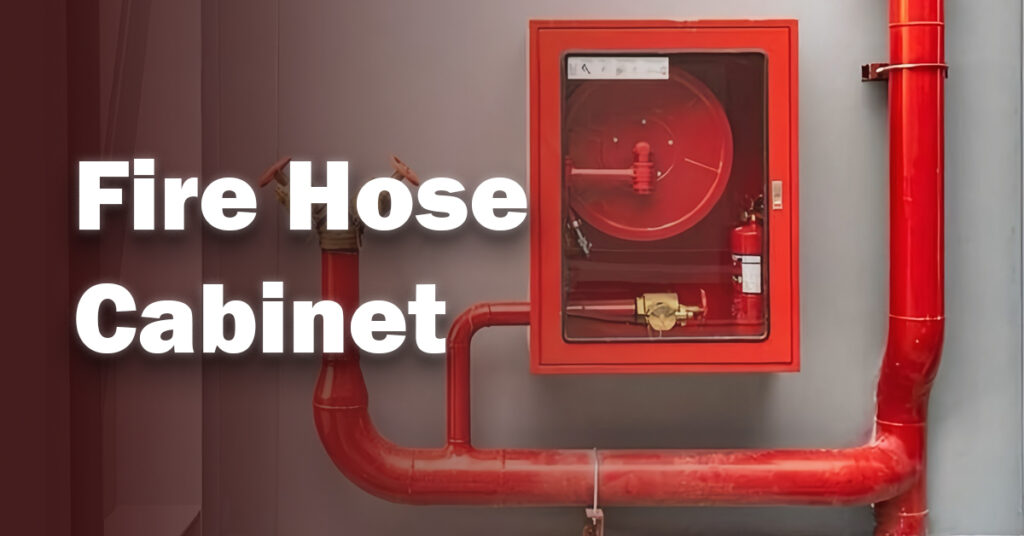
A fire cabinet is an enclosed storage cabinet that is affixed to or within a wall and that contains firefighting equipment, usually a hose, valve and nozzle along with a fire extinguisher. It provides instant water access to occupants and firefighters before a small fire becomes a big loss.
This type of fire hose reel cabinet is mounted adjacent to routes of egress and stairs to keep hydrants and equipment protected from dust and tampering yet accessible when a crisis arises.
Types of Fire Hose Cabinets
There are 4 basic styles of fire cabinets:
- Recessed cabinets: fitted along the wall to give a flush, clean finish, very common in offices and towers.
- Semi-recessed cabinets: partially recessed cabinets that offer a balance of appearance and convenience.
- Wall-mounted: cabinets that are securely mounted on the wall surface, suitable for retrofits, industrial applications etc.
- Outdoor cabinets: for yards and open parking, made of weather resistant materials.
Some projects install both a fire hose reel cabinet and a fire extinguisher cabinet in the same area, providing the occupants with both a continuous supply of water and a portable extinguisher in one area.
Cabinet Components
Inside a standard fire hose cabinet you will find a hose nozzle with a standpipe inlet connected to the building, a fabric or rubber lined hose, a discharge nozzle and a reel or rack to hold the hose coiled and ready. Most cabinets also have operating instructions and a tamper seal and clear signage labeled “Fire Hose”.
Instead of laying out the entire length of the hose before using, a fire hose reel cabinet secures the hose on a swiveling reel for quick deployment by one firefighter. Stations might also have a fire axe or spanner wrench for forced access when combining them.
Read More: Fire Fighting System | Design, Installation Maintenance Services
Fire Hose Cabinet Sizes
The dimensions of the cabinet can vary according to contents.
| Cabinet Type | Width × Height × Depth (mm) | Common Equipment Stored | Best Applications |
|---|---|---|---|
| Compact / Slim | 600 × 750 × 180 | Single 1″ hose reel (swing type) | Residential hallways, tight spaces |
| Standard Hose Reel | 800 × 800 × 300 | 1″ x 30m manual/automatic hose reel | Standard commercial buildings, offices |
| Double-Door Vertical | 700 × 1500 × 240 | Hose reel + Fire extinguisher + Valve | Shopping malls, high-rise buildings |
| Double-Door Horizontal | 1400 × 800 × 300 | Side-by-side hose reel and extinguishers | Parking garages, wide corridors |
| Heavy Industrial | 700 × 1800 × 240 | 1.5″ or 2.5″ lay-flat hose + Heavy valves | Warehouses, factories, power plants |
Installation Guidelines
Fire hose cabinets are installed in accordance with local building codes and NFPA codes (NFPA 14 and NFPA 10) to allow for quick access to the fire hose during an emergency.
- Valve Height: 900 mm to 1500 mm from the newly leveled top floor.
- Accessibility: Do not exceed a height of 1200 mm.
- Door Swing: Swing it at least 160 degrees without obstruction.
- Recessed Mounting: Used in narrow corridors to ensure protection of existing routes.
- Wall Support: Check to see whether the structure can support the weight of steel, valves, and water.
- Labeling: Highly visible red lettering by main exits.
Read More: Check Valve Types: Complete Guide for Piping and Fire Protection Systems
Material Options
Cabinet bodies are typically made of cold-rolled steel, stainless-steel or aluminum. If you’re decorating an indoor commercial space, consider using powder-coated steel, it offers a good value with strong corrosion resistance; however, stainless steel, particularly grades 304 & 316, is more durable for outdoor applications or humid coastal environments.
It’s also important to keep all fittings of the same material because aluminum, brass and other different metals can cause corrosion problems over time.
Fire Cabinet Maintenance
An unsupervised fire cabinet can fail when it’s most needed. A good workout plan consists of:
- Once a month to verify that the fire hose cabinet is free of obstructions and the door operates effectively.
- Leaks and corrosion inspections of the hose, valve and fittings are to be conducted on an annual basis.
- Taking water flow and pressure tests to ensure the system is working as desired.
- Changing tampered hose sections, signage or worn out tamper seals as they are identified.
A logged inspection record will also come in handy during the civil defense audit and during insurance reviews, the system is not just installed and forgotten.
NFPA Requirements
The NFPA 14, Standard for the Installation of Standpipe and Hose Systems, is the source of many references for fire hose cabinet design. It divides systems into three classes: Class I – 2.5” connections for firefighters, Class II – lighter 1.5” stations for trained occupants and Class III – a combination.
NFPA 14 also provides guidelines for valve clearance, minimum pressure at the highest accessible outlet and the need to have signage visible to immediately locate a hose station or fire extinguisher cabinet in case of an emergency.
Read More: Alternative Meta Title Addressable vs Conventional Fire Alarm System
Choosing the Right Fire Cabinet
Choosing the correct fire cabinet depends on the layout of your building, occupancy, and code requirements in your area. Think about if the space requires a “recessed” or “surface mounted” design, indoor or exposed to the weather, and if the space needs both a hose station and an extinguisher, or a combination of both.
Advice prior to purchase prevents rework and waste when the timing is right. A dependable fire hose cabinet is one investment you hope to never use, but you’ll be glad it’s there the one time you do.
The best way to keep your building safe and all its occupants safe is to select the proper equipment, install it properly, and keep an eye on it for inspection.