
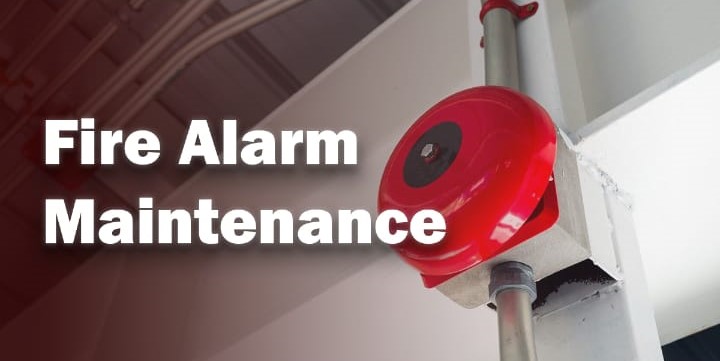
If a fire detection system is not used, it is nothing more than costly decoration. The difference between having a working fire alarm system and one that does not is the regular fire alarm maintenance.
This is because at Habikon we will help you as a property owner, facility manager, or any business owner anywhere in the world. We will show you how regular maintenance can keep persons, property and compliance safe and also will explain how to create a fire alarm inspection plan that is truly reliable!
Importance of Fire Alarm Maintenance
Having a fire alarm installed is no help until it’s tested and you’ve gained confidence in it. Structures are constantly evolving through their uses. Following the change of wiring age, dust builds up on detectors, batteries go bad and renovations change airflow, all of which impact sensor sensitive smoke detection.
A fire alarm system can appear to be fully functional on the surface but can actually begin to fail silently without fire alarm maintenance. Its protection extends not only in terms of your safety but also your liability and legal standing.
Without proper servicing, a system may not meet its insurance requirements and may fail to meet fire codes, iit is the building’s first and most important line of defense.
Fire Alarm Inspection Schedule
All fire alarm systems are on a schedule and the problem generally starts here. Fire alarm testing is not just an event that happens once a year, it’s a routine part of how a building works.
How frequently depends on the device, size of the property, and local ordinance, but the principle behind fire alarm maintenance remains the same no matter where you are, so it’s advisable to detect small problems before they become large ones.
Daily, Monthly & Annual Maintenance
Creating a lot of smaller tasks for your fire alarm maintenance routine is much easier to follow:
- Daily: Slowly scan the control panel to ensure no circuit breaker is tripped or trouble light is illuminated.
- Monthly: Testing of manual call points, battery condition check and noise oscillators/variators function.
- Annual: Full fire alarm service by a certified technician that includes all detectors, wiring connections and notification devices in a building.
This is a layered method where nothing is left untouched and it will create a history that establishes an audit trail of proper care and maintenance of your system.
Read More: Fire Hydrant System | Design, Installation & Maintenance
Fire Alarm Testing Procedures
Inspection will give you an impression of what a system looks like. Testing is telling what it does. Fire alarm testing includes checking devices for proper smoke/heat detection and that the alarm is audible to all areas of the building, including sounders, strobes and any related monitoring station.
Generally, the test process consists of:
- Testing smoke and heat detectors periodically (on a rotating basis) to test them over time
- Monitoring of sound levels at a level that is consistent with minimum values in all occupied space
- Checking backup batteries will provide electricity if the electricity goes down
- The signals are correctly received by the monitoring center or civil defense authority (if existing)
Common Fire Alarm Faults
Even the best system can experience issues once installed. These early recognitions prevent big system failures from occurring.
- Degradation: Backup batteries naturally lose capacity and should be replaced in a few years.
- Dust and contamination: These are often the leading cause of false alarms because of dust accumulating inside the smoke detector.
- Wiring errors: Loose connections, moisture or defective insulation can cause communication errors or ground faults.
- Sensitivity drift: As the sensors age, the source of the shaded area will decrease in sensitivity so it is important to test them periodically.
- Control panel fault codes: Fault codes found on the control panel generally refer to a specific device or circuit and should never be ignored as they are useful in identifying the cause and location of the fault.
If any of these occur then it is important to schedule a fire alarm repair sooner rather than later. When left alone it’s these little problems that are the cause of ordinary fire alarm maintenance becoming an emergency call.
Read More: Fire Hose Cabinet | Types, Installation & Fire Safety Guide
NFPA 72 Requirements
The National Fire Alarm and Signaling Code (NFPA 72) is referenced in many international standards for fire alarm systems. It provides guidance on the frequency of checking various types of devices, from weekly visual examination of the control panel to annual functional tests of all detectors and notification devices in the building.
But if you have properties that span across boundaries and are in areas where the code might be slightly different, it will help you to understand NFPA 72 as it is one of the most comprehensive codes in existence for fire alarm maintenance.
After keeping a strategic distance from the intervals or even as a benchmark, it provides the building proprietor a defensible and documented well being record that withholds any review.
Fire Alarm Maintenance Checklist
This handy checklist will help you stay prepared for your annual fire alarm inspection routine audit all year long:
- Make sure all control indicators are normal
- Test batteries and replace low capacity batteries
- Replace and test each smoke & heat detector periodically
- Test sounders, strobes and call points to ensure they activate as required.
- Inspect monitoring station cabling and communications
- Maintain records of all inspections and tests carried out and the date of each inspection
- Have an annual fire alarm service with a certified provider
A checklist such as this transforms the task of maintenance into an easily repeatable job that anybody on your team can do.
Read More: Fire Pump Testing | NFPA 25 Inspection & Testing Guide
Choosing a Maintenance Company
Not all providers are equal and the gap is right in the breakdown where you can’t afford it. When selecting a fire alarm maintenance company, consider the following:
- Highly qualified technicians with diverse prior experience with various system manufacturers
- Be sure to update all documentation and reporting in all instances following visits
- Quick Emergency Fire Alarm Repair Solutions
- Knowledge of all local regulations and internationally used codes, such as NFPA 72
A reliable fire alarm inspection team is only as reliable as the team behind it, which is why Habikon will work with clients on both an Egyptian and international level and report on its findings honestly.