
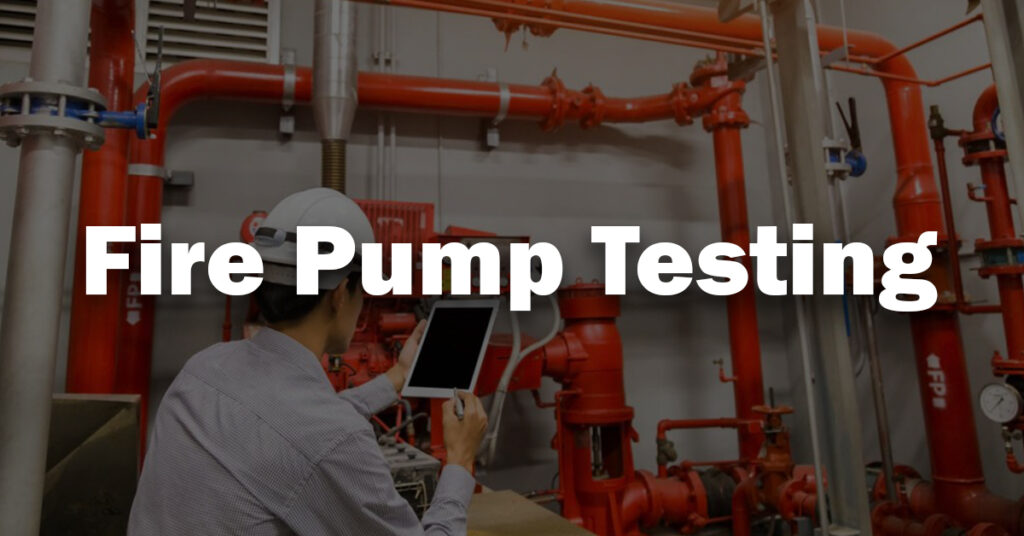
A fire pump only has one job and it must complete it right the first time and on the day it counts. No matter where your building is located, water delivered to your sprinklers at the time of a fire will be provided by a pumped water system which has already been tested and is reliable.
The point of fire pump testing is not to perform a routine test for the inspector, its goal is to stop a fire from spreading or causing a loss of life from the fact that no water was pumping.
Why Fire Pump Testing Is Important
Fire pumps are not used for the majority of their life and may only run a few minutes per week. This lazy time is when the fire pump test is important because there have even been pumps that worked in the mechanical room but failed at test time when called for to provide real test pressure. Regular checks is to:
- Ensure the pump automatically starts up to rated pressure
- Avoid failure by catching corrosion and wear
- Ensure that the insurance and civil defense credentials are current
- Continue to develop a track record to evaluate year on year
Types of Fire Pump Tests
Fire pump testing is not a one-sided occurrence. Some tests are used for day one testing, while other tests are used for various purposes throughout the years to ensure that the pump will continue to function.
Fire Pump Acceptance Test
This test is done once and immediately after installation or a large repair. It verifies that the pump is able to perform at the rated level prior to the building being occupied and its performance is used as the benchmark for all subsequent tests.
Weekly Fire Pump Test
A no-flow and short-run test which will only demonstrate that the pump has a start and that the controller is responding properly. It is required once a week in a diesel-driven pump and often for electric pumps as required by local codes of practice. It takes a few minutes and it detects battery, fuel and starting problems at an early stage.
Annual Fire Pump Performance Test
This is the true test and is conducted once a year. The pump is operating at three horsepower modes: no horsepower, rated horsepower and 150% of rated horsepower. The output of the pump can be compared to that on the day of installation.
Read More: Types of Smoke Detectors | Complete Guide to Fire Detection Systems
Fire Pump Flow Test
The flow test really warrants its own discussion because it is the centerpiece of any fire pump performance test and the most telling component of annual fire pump testing. Water flows out of a test header or flow meter and is measured with pressures, voltage, current, and RPM as a technician visits each stage.
When plotted on the acceptance curve, these can indicate that a strainer is clogging or that an impeller is wearing out or that there is power loss of the driver.
Weekly vs Annual Testing
Let’s take a quick look at the numbers in the table below to see how the two most popular types of fire pump testing compare.
| Aspect | Weekly Test | Annual Test |
|---|---|---|
| Purpose | Confirm automatic start | Verify full rated performance |
| Flow condition | No flow (churn) | Churn, 100%, and 150% flow |
| Duration | 5 to 10 minutes | 1 to 3 hours |
| Who performs it | Trained in-house staff | Certified fire protection technician |
| Documentation | Simple log entry | Full performance curve and report |
NFPA 25 Testing Requirements
Fire protection teams use NFPA 25 as the international reference standard to schedule the fire pump testing. It identifies the various levels of the test: weekly no-flow tests, condition checks each month, annual flow test, and full tests every three years.
There are additional steps with diesel pumps such as operating under load to monitor coolant temperature and governor stability. Local civil defense authorities regularly refer to these intervals, and compliance according to NFPA 25 is compliant with a local or international insurance company.
Read More: Fire Alarm System Design Requirements
Testing Procedures
The purpose of a well run fire pump test is to maintain consistency over time in a sequence:
- Examine the previous report and original fire pump acceptance test curve
- Prevent uneven flow by testing the suction tube, valves, and strainer condition prior to start up
- Run the pump at churn, at 100% and then at 150% of rated flow with logging each run.
- Check controller signals, alarms and auto transfers
- Close and record on the official form
Common Testing Failures
Most of the failed tests are due to a few persistent offenders:
- Air in the vacuum leg, leading to vibration and lost capacity
- Partially obstructed valves that prevent flow or strainers that are blocked
- A leak in the system that provides inaccurate readings
- Active preview in the controller settings to prevent a driver from accelerating to full speed
- Standing upwind or downstream of the test area with no standing isolation before the test
- If the diesel engines fail to maintain RPM load up then you need to replace them
These examples will help prevent end of test day guessing from becoming consistent fire pump testing.
Read More: Fire Fighting System | Design, Installation & Maintenance Services
Fire Pump Test Checklist
Consistent fire pump testing begins before even reaching the job site! The following list should be walked through first:
- Ensure that the position of a suction tank or municipal supply is normal
- Locate the jockey pump away from other sources to avoid interfering readings
- Check gauges, sensors and the controller display for damage
- Clear up the discharge path or flow meter set up.
- Have the previous test report and performance curve on hand
- Refuel, oil and charge diesel machines
- Call the fire alarm monitoring company before starting
Keeping the truth upfront and honest about the fire pump test results helps save lives and property, no matter where your facility is located. When you need a team that is both familiar with both local and international standards, we can make it easier to plan your next test.